Understanding Italy’s Restaurant Classifications
I’m currently in Italy leading three back-to-back-to-back tours in Tuscany and Umbria. While dining out, a number of participants have questioned Italy’s restaurant classifications. As such, I thought only appropriate to put together this handy guide on all of Italy’s restaurant classifications.
As you know, Italy is a country where food is not just sustenance—it’s a way of life. Every region, city, and even neighborhood expresses its culture through food, and Italians have developed a rich variety of dining establishments to match every occasion, appetite, and hour of the day. While travelers often use the word “restaurant” to describe any place serving food, Italians are much more specific. A gelateria, trattoria, or osteria each carries its own history, style, and culinary philosophy.
In this guide, we’ll explore the major types of eateries you’ll encounter across Italy—from the morning bar to the late-night ristorante—and what makes each one special.
1. Bar – The Heartbeat of Daily Life
Despite the name, an Italian bar isn’t primarily a place for cocktails or nightlife—it’s a cornerstone of daily Italian routine. Italians visit the bar for coffee, pastries, and conversation, often multiple times a day.
In the morning, locals crowd the counter for an espresso or cappuccino with a cornetto (Italy’s answer to the croissant). Standing at the bar is cheaper than sitting at a table, and the interaction with the barista is part of the experience.
Later in the day, the bar transforms into a social hub for a light lunch, a spritz aperitivo, or even a quick sandwich. Bars serve everything from freshly squeezed orange juice to small glasses of wine, and some even morph into lively spots in the evening.
Think of the Italian bar as a combination of café, coffeehouse, and community center—an all-day meeting point for locals. (Read more on Italy’s coffee culture here.)

Picture Credit: Lazy Italian Culinary Adventures
2. Pasticceria – Where Sweet Dreams Come True
A pasticceria is a pastry shop, often filled with an irresistible display of cakes, tarts, and biscuits. Italians visit pasticcerie in the morning for brioche, at midday for a sweet snack, or on Sundays to pick up a box of pastries to share with family.
Each region has its specialties:
- In Sicily, you’ll find cannoli and cassata.
- In Naples, the sfogliatella reigns supreme.
- In northern Italy, delicate cream puffs and fruit tarts dominate.
Many pasticcerie also double as bars, serving coffee alongside sweets. The best ones are artisanal, where the scent of butter, sugar, and espresso fills the air—a quintessential Italian sensory experience. (Read more on Italy’s pastry culture here.)
3. Gelateria – The Art of Italian Ice Cream
No trip to Italy is complete without a stop (or ten) at a gelateria. Italian gelato differs from regular ice cream in texture, richness, and intensity of flavor. Made with more milk than cream and less air, gelato is denser and more flavorful.
Look for “artigianale” gelaterie, which means the gelato is made in-house from fresh ingredients rather than industrial mixes. The best gelato is stored in covered metal tins, not piled high in neon-colored mountains. (Read more on how to order gelato here.)
Beyond classics like cioccolato (chocolate), nocciola (hazelnut), and pistacchio, you’ll find seasonal fruit sorbets and creative combinations such as ricotta e fichi (ricotta and figs). Italians enjoy gelato year-round—it’s as much a ritual as it is a treat.
4. Tavola Calda – The Warm Table
A tavola calda, literally “hot table,” is a casual eatery offering pre-cooked, ready-to-eat meals. It’s the Italian equivalent of a cafeteria or fast casual diner, perfect for a quick lunch.
You’ll find dishes like lasagna, roast chicken, eggplant parmigiana, and vegetable sides displayed behind glass counters. You simply point to what you’d like, pay, and sit down with your tray.
Tavole calde are popular with office workers and students, offering a satisfying meal without the time (or cost) of a formal restaurant. They are also a great place to sample homemade-style cooking on a budget.
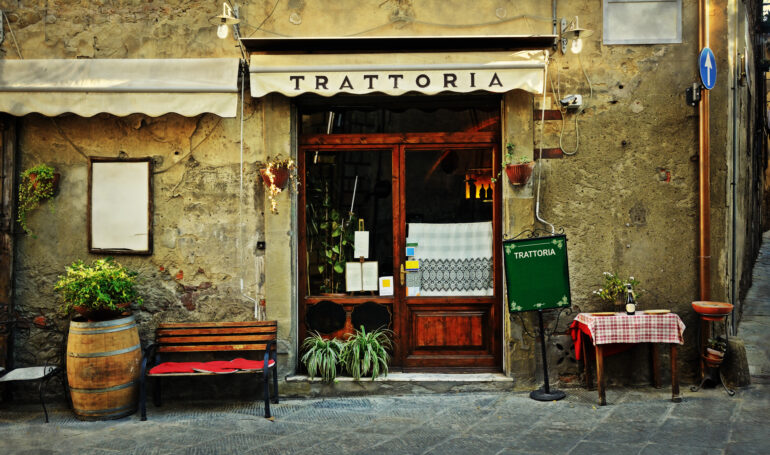
5. Trattoria – The Soul of Italian Cooking
The trattoria is the heart of traditional Italian dining. Historically family-run, these cozy eateries serve local, home-style dishes in a relaxed setting. Menus are often handwritten, seasonal, and short—reflecting what’s fresh and available that day.
Expect regional specialties rather than haute cuisine:
- In Rome, a trattoria might serve cacio e pepe or amatriciana.
- In Tuscany, you’ll find ribollita and bistecca alla fiorentina.
- In Emilia-Romagna, look for tagliatelle al ragù (the original “Bolognese”).
Prices are moderate, portions are generous, and service is friendly but informal. A trattoria is where Italians go when they want real food, not fanfare.

Picture Credit: Lazy Italian Culinary Adventures
6. Osteria – From Tavern to Trendy
The osteria has evolved over time. Traditionally, it was a rustic tavern offering simple food and local wine, often with shared tables and a focus on conviviality. You went to an osteria to drink first, eat second.
Today, the osteria has experienced a rebirth. Many have become stylish yet approachable restaurants that combine heritage recipes with modern sensibility. While the wine list remains central, food now takes equal importance.
A good osteria strikes a balance between tradition and innovation—warm hospitality, authentic flavors, and a touch of creativity. Prices can range widely, from humble to upscale.
7. Ristorante – Formal Dining, Italian Style
A ristorante is what most non-Italians think of as a “restaurant.” It’s the most formal of Italy’s dining classifications, offering table service, multi-course menus, and often a sommelier.
Ristoranti vary in style—from Michelin-starred establishments to family-run places with white tablecloths and impeccable hospitality. Dishes are artfully plated, service is professional, and the pace is leisurely.
Expect to enjoy a full Italian meal structure:
- Antipasto – appetizer
- Primo – pasta or risotto
- Secondo – meat or fish
- Contorno – side dish
- Dolce – dessert
- Caffè and digestivo – espresso and after-dinner liqueur
While trattorie and osterie celebrate comfort and simplicity, ristoranti elevate the dining experience to a refined art.
8. Enoteca – The Wine Lover’s Sanctuary
An enoteca is primarily a wine bar or wine shop specializing in local and regional bottles, often accompanied by small plates such as cheese, cured meats, or bruschette.
Originally established to promote regional wines, many enoteche now serve as casual or elegant spots for aperitivo or light dinner. Staff are usually knowledgeable about vintages and pairings, making it a perfect stop for anyone eager to dive into Italy’s diverse wine culture.
You’ll find enoteche everywhere from ancient cellars to sleek urban lounges, each celebrating the Italian passion for good wine and good company.
9. Agriturismo – Dining in the Countryside
An agriturismo offers a uniquely Italian experience that blends hospitality, nature, and gastronomy. These are working farms that host guests for meals or overnight stays, serving food grown or produced on-site.
Meals often include homemade pasta, farm-raised meats, fresh cheeses, and estate wine, all reflecting the region’s terroir. Dining at an agriturismo feels like being welcomed into someone’s home—because often, you are.
It’s a chance to experience the slow rhythms of rural Italy and to understand the deep connection between land and table that defines Italian cuisine.

Picture Credit: Lazy Italian Culinary Adventures.
10. Paninoteca and Rosticceria – Casual Bites on the Go
- A paninoteca specializes in panini—Italian sandwiches filled with cured meats, cheeses, and vegetables. They’re ideal for a quick lunch or late-night snack.
- A rosticceria focuses on roast meats and other takeaway items like arancini, fried chicken, and potato croquettes.
Both are perfect for casual dining or picnics, especially when you want authentic Italian flavor without a full sit-down meal.
The Beauty of Italian Dining Diversity
What makes Italy’s culinary landscape so rich is not just the variety of food, but the diversity of contexts in which it’s enjoyed. Each establishment reflects a moment in Italian life—whether it’s a quick espresso at the bar, a slow Sunday lunch at the trattoria, or a sunset aperitivo at the enoteca.
For travelers, understanding these distinctions transforms eating in Italy from a simple activity into a cultural adventure. You’ll not only taste the food—you’ll experience the rhythm of Italian living itself.
Final Thoughts
Next time you’re on one of my culinary adventures and you find yourself wandering through the cobblestone streets of Bologna, Cortona, or Ortygia, pay attention to the signs. Step into that tiny osteria tucked behind the piazza, grab a gelato from the neighborhood gelateria, or join locals for coffee at the bar.
Each experience tells a story—a story of tradition, community, and the timeless Italian devotion to food.
Because in Italy, every meal—no matter how simple—is a celebration of life.

What to Pack for Italy
Cosa Mettere in Valigia per l'Italia
Everyone is always asking me what they should pack for Italy,
so I’ve created a quick reference guide that you can use for your next trip.
Hint: You don’t need nearly as much as you think you do!
Leave a Reply