How to Spot Quality Tuscan Leather: What to Look For and Where to Shop in Florence
An Italian insider’s guide to buying beautiful leather goods in Tuscany without falling for tourist traps.
If you’re joining me in Tuscany soon for our sold-out Christmastime Markets and Culinary Tour, perhaps a beautiful Italian leather handbag, jacket, or accessory is on your shopping wish list! And even if you’re planning a visit to Florence at another time of year, knowing how to recognize quality Tuscan leather—and where to find it—will help you bring home something truly special.
Florence is famous for many things: Renaissance art, magnificent architecture, incredible food, and, of course, its centuries-old tradition of leather craftsmanship. From buttery-soft handbags and beautifully crafted jackets to wallets, belts, and accessories, leather shopping in Florence, or elsewhere in Tuscany, can be a wonderful experience.
But here’s something many visitors don’t realize: Not all leather sold in Tuscany is created equal.
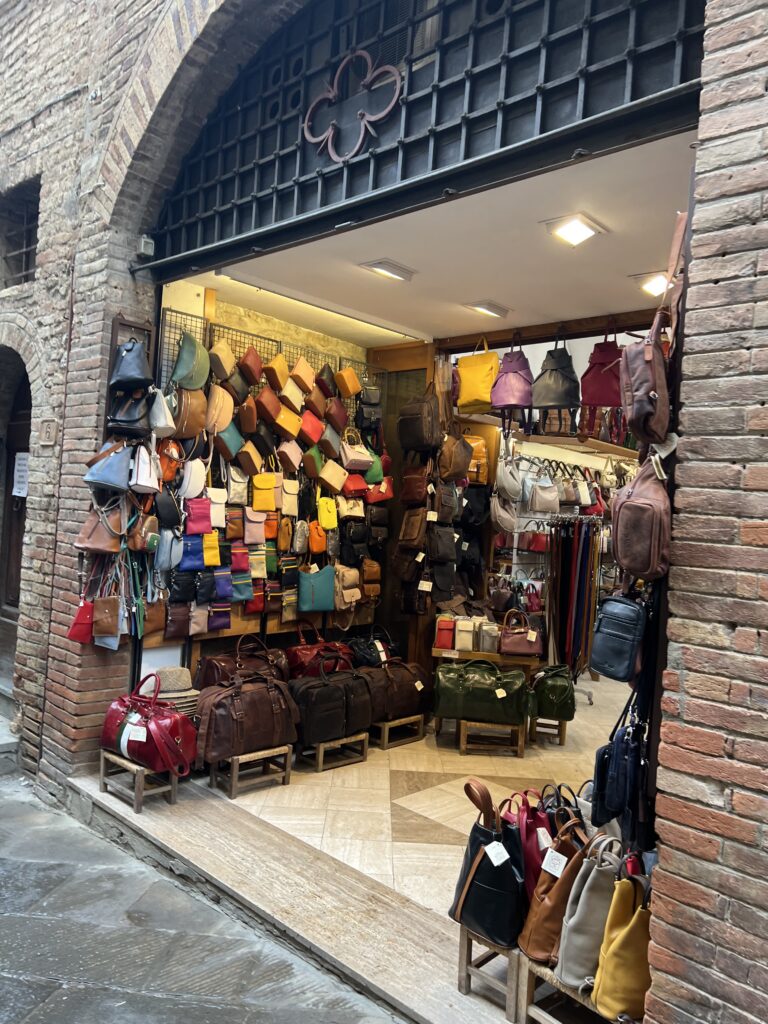
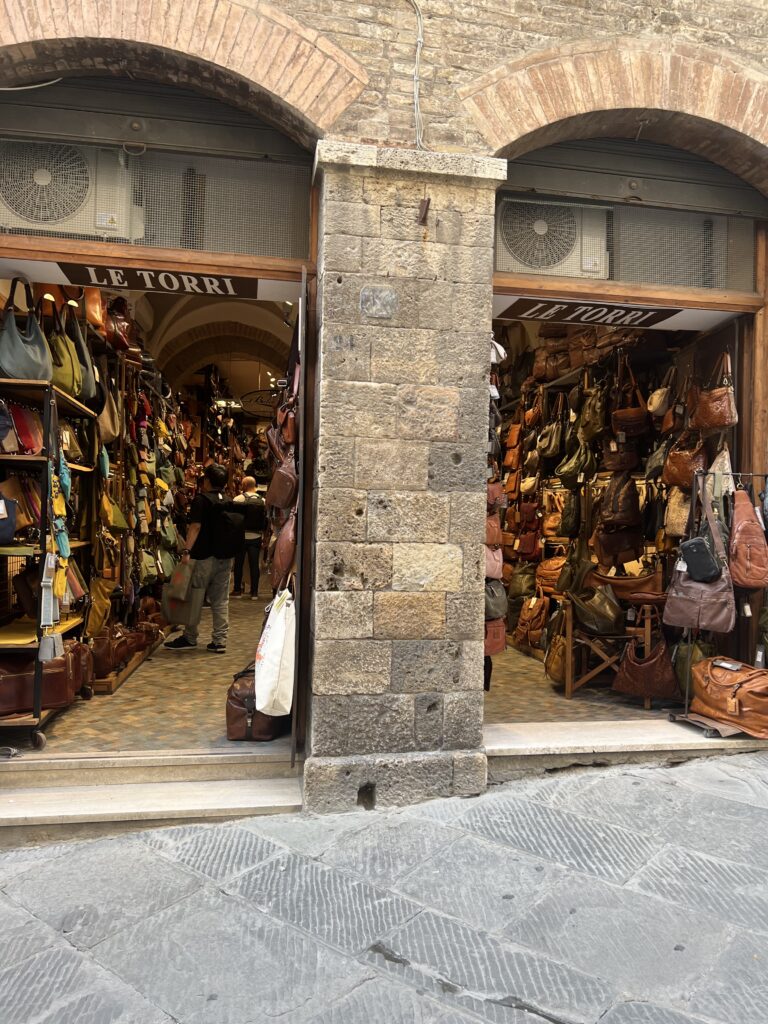
Walk through the historic center in Florence, and you’ll encounter dozens of shops displaying leather handbags, jackets, and wallets. Some sell beautifully crafted pieces made by skilled Italian artisans. Others sell mass-produced merchandise that has little connection to Tuscany’s leather traditions.
So how can you tell the difference? And where in Florence should you shop if you’re looking for something authentic?
As a native Italian who loves sharing the best of Italy with my travelers, I’m happy to offer a few tips before you open your wallet!
Why Is Florence So Famous for Leather?
Florence’s relationship with leather goes back centuries, particularly to the Middle Ages, when the city’s artisans became known for their expertise in tanning, dyeing, and working animal hides.
Leatherworking was an important part of the Florentine economy, and the city’s craftsmen developed techniques that helped establish Tuscany’s reputation for exceptional leather goods.
The nearby town of Santa Croce sull’Arno remains an important center of Italy’s leather industry today. Florentine leather is prized not simply because it’s Italian, but because of the craftsmanship, attention to detail, and quality of materials that can go into producing it.
A well-made leather handbag or jacket can last for decades if properly cared for. In fact, some leather pieces become even more beautiful with age. But that brings us to the most important question:
How do you know you’re buying the real thing?
7 Ways to Recognize Good-Quality Florentine Leather
1. Trust Your Sense of Touch
One of the first things I recommend sounds obvious, but it’s actually just touching the leather.
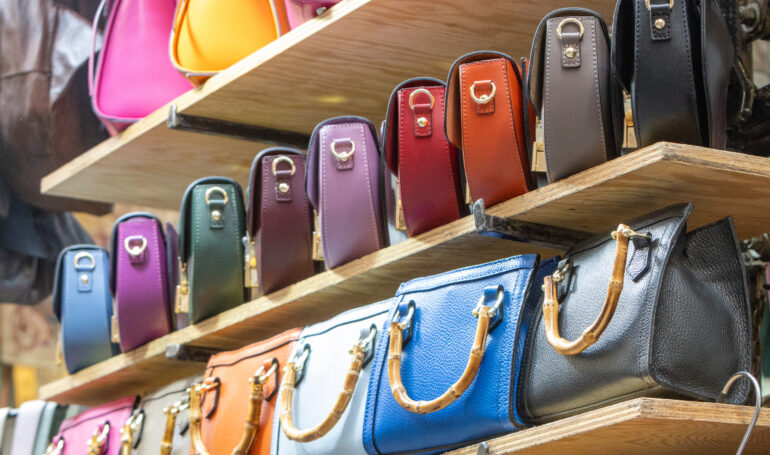
Good-quality leather often feels supple, flexible, and substantial without being unnecessarily stiff. Depending on the finish, it may feel wonderfully soft or have a firmer, more structured texture. Be cautious of materials that feel excessively plastic-like or have an artificial coating that hides the surface entirely.
However, remember that different types of leather have different textures. A structured leather handbag will naturally feel different from a soft lambskin jacket. I’m partial to very soft leather, but that’s just a preference and not an indication of “real” Tuscan leather vs. an inauthentic product.
Picture Credit: Lazy Italian Culinary Adventures
2. Look Closely at the Surface
Genuine leather often has natural variations in its grain, including small markings, pores, or subtle differences in texture. These aren’t necessarily imperfections. They’re part of what makes leather a natural material. Full-grain leather, which retains the outer grain surface, is particularly desirable for many durable products.
But don’t assume that perfectly smooth leather is fake, High-quality leather can also be finished, embossed, or treated to achieve a uniform appearance. The important thing is to understand what you’re purchasing.
3. Pay Attention to the Smell
There’s something unmistakable about the smell of a traditional leather shop. Good leather may have a pleasant, earthy scent, while some synthetic products have a stronger chemical or plastic smell.
That said, smell alone is not a reliable test of authenticity. Leather treatments, dyes, and finishes can affect the scent, and some synthetic products are manufactured to smell like leather. Use your nose, but don’t rely on it exclusively!
4. Examine the Stitching and Construction
This is one of my favorite ways to judge quality. Look carefully at the stitching on a handbag, wallet, or jacket. Are the stitches even and secure? Are the seams straight? Are the handles firmly attached? For handbags, check the lining, zippers, clasps, and hardware. A beautiful leather exterior means very little if the bag falls apart after a few months!
Quality craftsmanship should be visible in the details, including those you might not immediately notice.
5. Understand the Different Types of Leather
Not all genuine leather is the same.
- Full-grain leather: Retains the natural grain surface and is often valued for durability and the patina (sheen) it develops over time.
- Top-grain leather: A broad category that includes leather whose surface may be refined or corrected. Quality varies considerably.
- Suede: Made from the flesh side of the hide or a split layer, with a soft, velvety texture.
- Bonded leather: Made using leather fibers or scraps combined with binding materials. It generally doesn’t offer the same durability as a quality solid-leather product.
Don’t be afraid to ask the salesperson exactly what type of leather you’re purchasing. A knowledgeable seller should be comfortable explaining the materials used.
Picture Credit: Lazy Italian Culinary Adventures
6. Don’t Be Fooled by the Words “Genuine Leather” or “Made in Italy”
Here’s where many shoppers get confused.
A label reading vera pelle, meaning genuine leather, indicates that the product is being represented as real leather. But it doesn’t automatically guarantee exceptional quality.
Likewise, Made in Italy is an origin claim, not a guarantee that an item was handmade in Florence. An item may legitimately be made in Italy without being produced by a small Florentine artisan.
If you’re hoping to purchase something locally crafted, ask where the item was manufactured and whether the shop can tell you about its maker.
A few useful Italian phrases:
- È vera pelle? — Is it genuine leather?
- È fatto/a a Firenze? — Is it made in Florence?
- È fatto a mano? — Is it handmade?
- Dove viene prodotto? — Where is it produced?
A reputable shop should be happy to answer your questions.
7. Be Realistic About Prices
Everyone loves a bargain, myself included! But if you find a supposedly handmade, full-leather handbag for an unbelievably low price, it’s worth asking a few additional questions.
Good leather, skilled labor, quality hardware, and careful construction all cost money. That doesn’t mean the most expensive bag is necessarily the best. It simply means that exceptionally low prices can sometimes indicate compromises in materials or manufacturing.
My advice? Buy one beautiful, well-made piece that you’ll use for years rather than several inexpensive pieces that won’t last.
Where to Shop for Leather in Florence
Florence offers everything from lively outdoor markets to established leather boutiques and artisan workshops. Here are several places worth exploring during your visit.
1. Scuola del Cuoio — Santa Croce
One of Florence’s most interesting leather-shopping destinations, located in the historic Santa Croce complex. Visitors can discover traditional craftsmanship and browse handbags, wallets, belts, and other leather accessories. A particularly good choice if you’re interested in the story behind your purchase. They will even engrave your item for free! And here you will be guaranteed a Tuscan made product, with Tuscan material. The price here reflects the product’s craftsmanship and authenticity. (Conveniently located near the Santa Croce Christmas Market!)
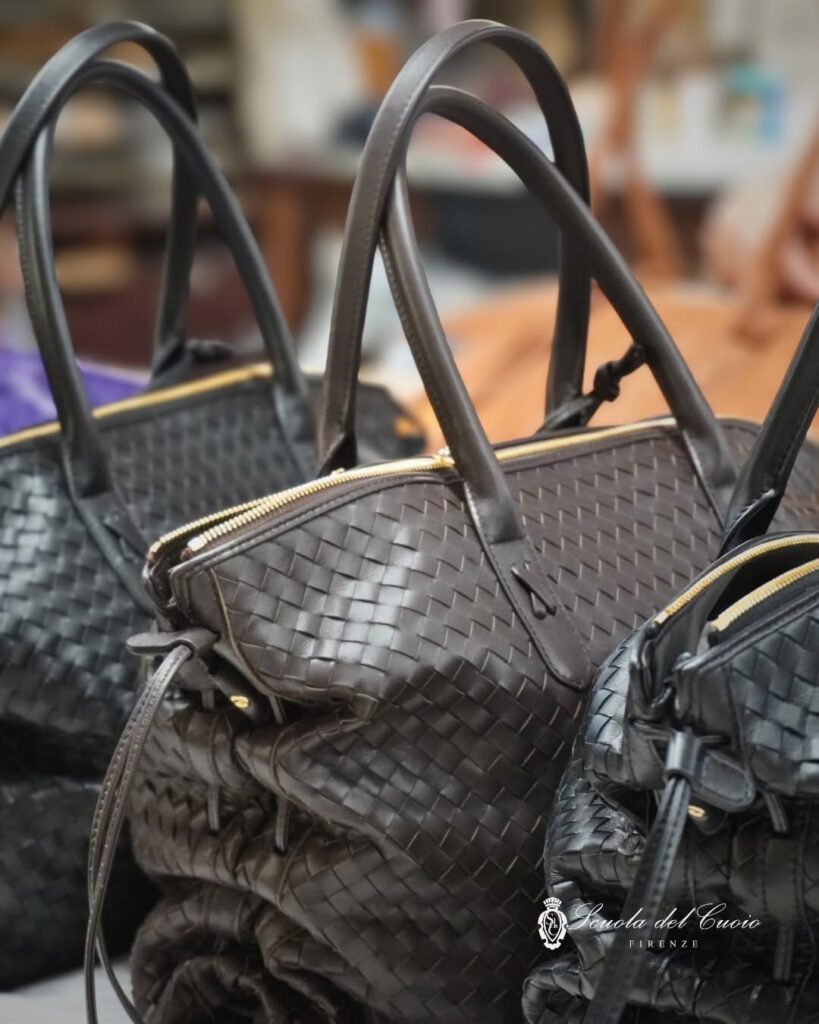
Picture Credit: Scuola del Cuoio
2. Il Bisonte — Via del Parione
A well-established Florentine leather brand known for classic designs and beautiful vegetable-tanned leather. Its flagship boutique offers handbags, wallets, and accessories, including selected personalized pieces. An excellent option for something timeless that you will treasure for years to come.
3. Benheart — Florence
If you’re shopping for a leather jacket or something a little more contemporary, Benheart is worth a visit. This Florentine brand offers Italian-made leather clothing, handbags, belts, and accessories with a modern aesthetic.
4. San Lorenzo Leather Market
For a more casual shopping experience, wander through the outdoor stalls around San Lorenzo. You’ll find plenty of handbags, wallets, belts, and souvenirs at a variety of prices. This is the perfect stop for this Christmas stocking stuffers or smaller gifts. However, this is where I would encourage visitors to be especially selective. Not everything sold here is handmade or produced in Florence. Enjoy browsing, but don’t assume that every leather item is an authentic Florentine artisan product. This is where I have purchased several leather belts and inexpensive coin purses, eyeglass cases and wallets, but not where I would invest in a leather purse or jacket.
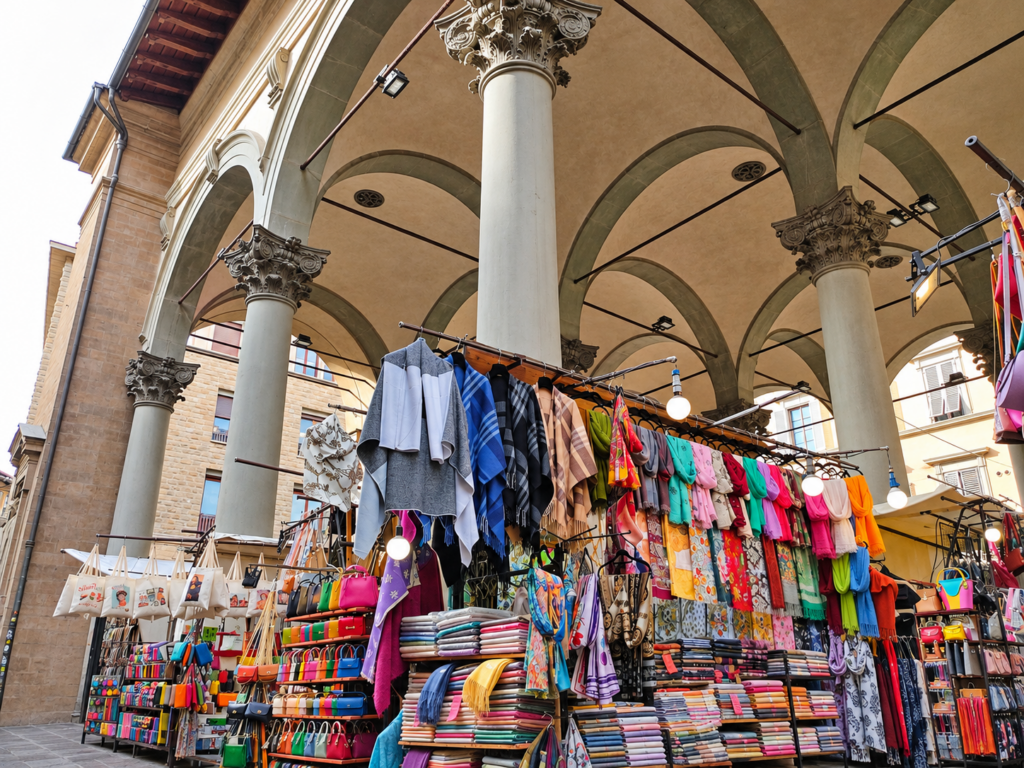
Picture Credit: Lazy Italian Culinary Adventures
5. Ricchi Francisco, Cortona
And if you’re joining me in my new hometown of Cortona this winter on our Christmastime tour, be sure to stop by Ricchi Francisco on Via Dardano, a lovely local shop where you can browse beautiful Italian leather handbags and accessories without the crowds of Florence.
A Few More Shopping Tips Before You Buy
Ask about vegetable-tanned leather. Tuscany is particularly well known for this traditional process, which uses tannins derived from plants. Look for the Pelle Conciata al Vegetale in Toscana certification when applicable. This identifies leather meeting the standards of the Genuine Italian Vegetable-Tanned Leather Consortium.
Check the return policy. Before purchasing an expensive handbag or jacket, ask whether returns or exchanges are permitted. Don’t assume you’ll be able to return an item once you’re back in the United States.
Ask about tax-free shopping. Travelers who reside outside the European Union may qualify for a VAT refund on eligible purchases. Ask the retailer about the required paperwork and keep your receipts.
Don’t rush your purchase. If you’re spending several hundred euros on a beautiful leather jacket or handbag, take your time. Try it on, inspect the construction, compare a few shops, and make sure you genuinely love it. It’s an investment, after all.
Think about how you’ll care for it. Quality leather needs occasional maintenance. Ask the shop which cleaning and conditioning products are appropriate for your particular purchase.
My Final Advice: Buy Something You’ll Treasure
For me, shopping in Italy should be about more than bringing home another souvenir. It’s about discovering the people, traditions, and craftsmanship that make this country so special.
A beautiful leather handbag purchased from a Florentine artisan isn’t simply an accessory. It’s something that can remind you of wandering through Florence’s cobblestone streets, admiring the Renaissance architecture, and enjoying a wonderful day in Tuscany. And every time you reach for that bag or put on that jacket, perhaps you’ll remember your Italian adventure.
This December, I’ll be welcoming another wonderful group of travelers for my Christmastime tour in Tuscany. Between our culinary experiences, beautiful Tuscan towns, festive atmosphere, and Christmas traditions, there will also be opportunities for a little Italian shopping!
And if a beautiful leather handbag happens to find its way into your suitcase, well, I certainly won’t judge! After all, the best souvenirs from Italy are the ones that bring us joy long after we’ve returned home.
Happy shopping, and see you in Toscana soon!

What to Pack for Italy
Cosa Mettere in Valigia per l'Italia
Everyone is always asking me what they should pack for Italy,
so I’ve created a quick reference guide that you can use for your next trip.
Hint: You don’t need nearly as much as you think you do!
Leave a Reply